
Ask ten people on a construction site whether waterproofing and damp proofing are the same thing, and you’ll likely get ten different answers. The two terms get used interchangeably so often that many homeowners end up paying for the wrong treatment entirely — sometimes underprotecting a basement, other times overspending on a wall that only needed a simple damp-proof course. This guide clears up the waterproofing vs damp proofing debate for good, so you know exactly what your building needs.
What Is Waterproofing?
Waterproofing is the treatment of a surface or structure to make it completely impermeable to water — including liquid water under hydrostatic pressure. In simple terms, it creates a barrier strong enough to hold back water even when it’s actively pushing against a wall or floor, such as in a basement below the water table or a terrace holding standing rainwater.
What Is Waterproofing Used For?
-
Terraces, flat roofs, and podium decks
-
Bathrooms, kitchens, and other wet areas
-
Basements and retaining walls below the water table
-
Water tanks, swimming pools, and other water-retaining structures
What Is Damp Proofing?
Damp proofing is a lighter-duty treatment designed to resist moisture absorption and soil dampness — but not water under active pressure. It’s typically applied as a thinner coating or a physical damp-proof course (DPC) layer, and its job is to slow down moisture movement rather than block it outright.
What Is Damp Proofing Used For?
-
External walls exposed to rain (but not standing water)
-
Foundation walls above the water table
-
Preventing rising damp in new and existing construction
-
Controlling condensation-related dampness indoors
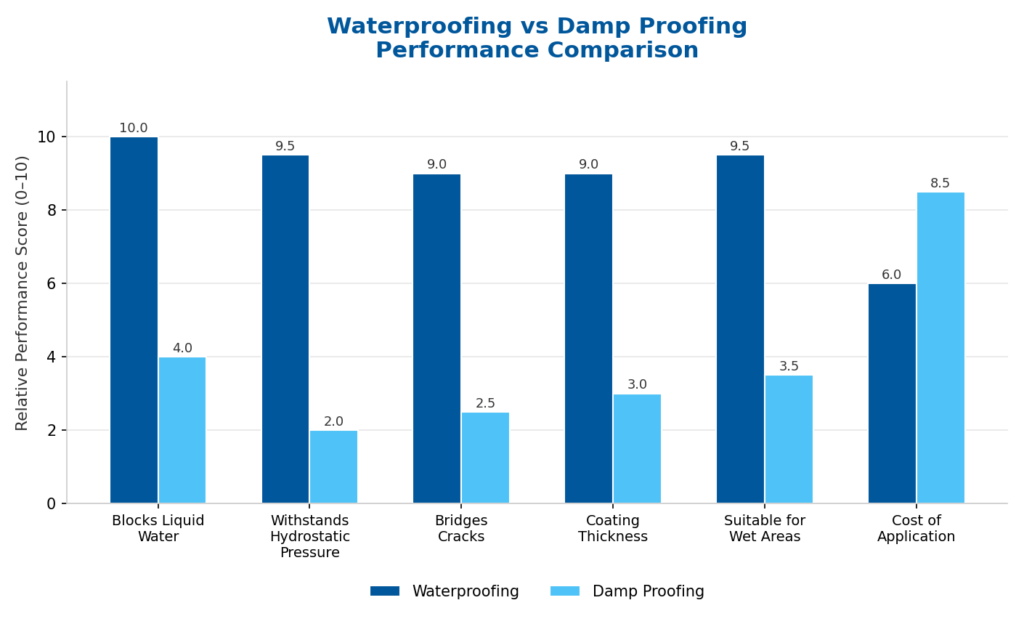
Difference Between Waterproofing and Damp Proofing: Key Factors
1. Hydrostatic Pressure Resistance
This is the single biggest difference between waterproofing and damp proofing. Waterproofing is engineered to withstand hydrostatic pressure — water actively pushing against a structure. Damp proofing simply cannot handle this; it’s designed only for conditions where no significant water pressure is present.
2. Material Thickness
Damp proofing coatings are typically much thinner than waterproofing membranes. Waterproofing systems are applied in far greater thickness specifically so they can bridge small cracks and resist sustained water contact without failing.
3. Crack-Bridging Ability
Waterproofing materials are typically flexible and elastic, allowing them to stretch across minor cracks that develop over time. Damp proofing materials are more rigid and don’t offer this same crack-bridging capability.
4. Cost of Application
Damp proofing is generally the cheaper option upfront, since it uses less material and simpler application methods. Waterproofing costs more per square foot, but for high-risk areas, it’s the only treatment that actually prevents structural water damage — making it the more cost-effective choice long-term where it’s genuinely needed.
Waterproofing vs Damp Proofing for Walls and Buildings
So how do you decide which treatment your walls or building actually need? The answer comes down to one core question: is the surface exposed to standing water or hydrostatic pressure, or just general moisture and rain?
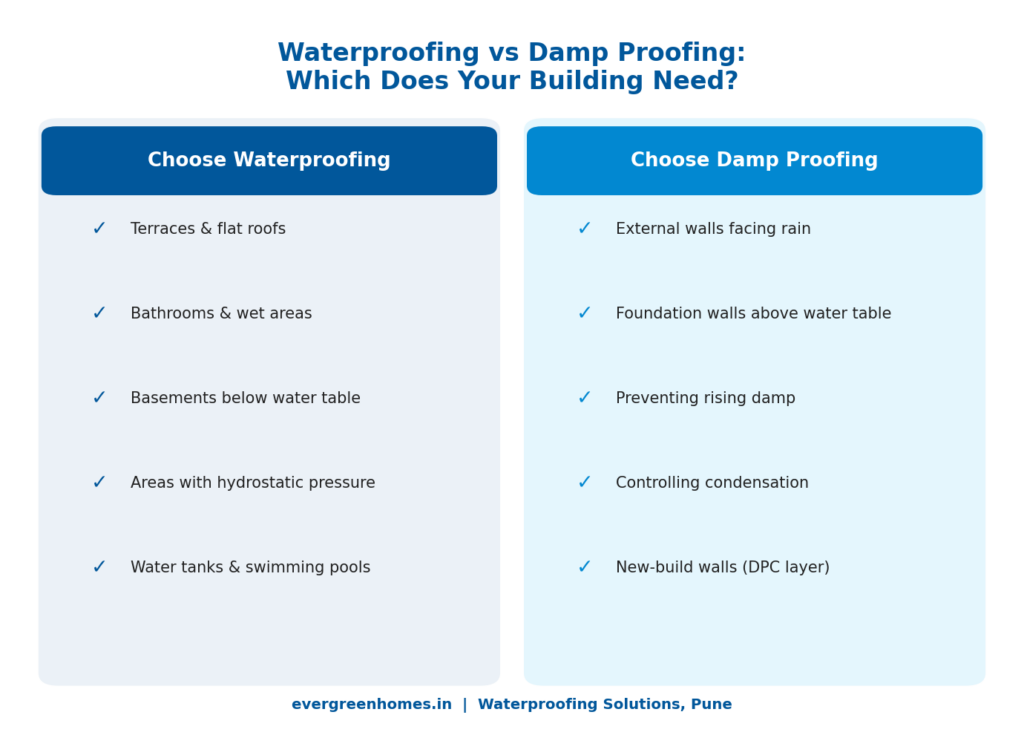
Which Is Better: Waterproofing or Damp Proofing?
Neither is universally ‘better’ — the right choice depends entirely on the exposure conditions of the surface in question:
-
Choose waterproofing for terraces, bathrooms, basements, and any surface facing standing water or hydrostatic pressure
-
Choose damp proofing for above-grade external walls facing only rain exposure, or as a standard preventive DPC layer in new construction
-
When in doubt, waterproofing is the safer choice — it offers a higher level of protection, even in conditions where damp proofing might technically suffice
Frequently Asked Questions
Can damp proofing be upgraded to waterproofing later?
In most cases, no — damp proofing needs to be removed and the correct waterproofing system applied from scratch, since the two use fundamentally different materials and application thicknesses.
Is waterproofing necessary for every building in Pune?
Not every wall needs waterproofing, but terraces, bathrooms, and any basement or retaining wall in contact with groundwater almost always do, especially given Maharashtra’s intense monsoon season.
Do new buildings need both waterproofing and damp proofing?
Yes, often — new construction commonly uses a damp-proof course for general wall protection alongside dedicated waterproofing in high-risk areas like terraces, bathrooms, and basements.
Get the Right Protection with Evergreen Enterprises
Whether your project needs full waterproofing for a terrace or basement, or a reliable damp-proofing solution for external walls, Evergreen Enterprises offers a complete range of solutions trusted by contractors and homeowners across Pune.
📞 Contact us today at 7768996699 / 7768993399 or explore our Waterproofing Solutions range to find the right treatment for your building.