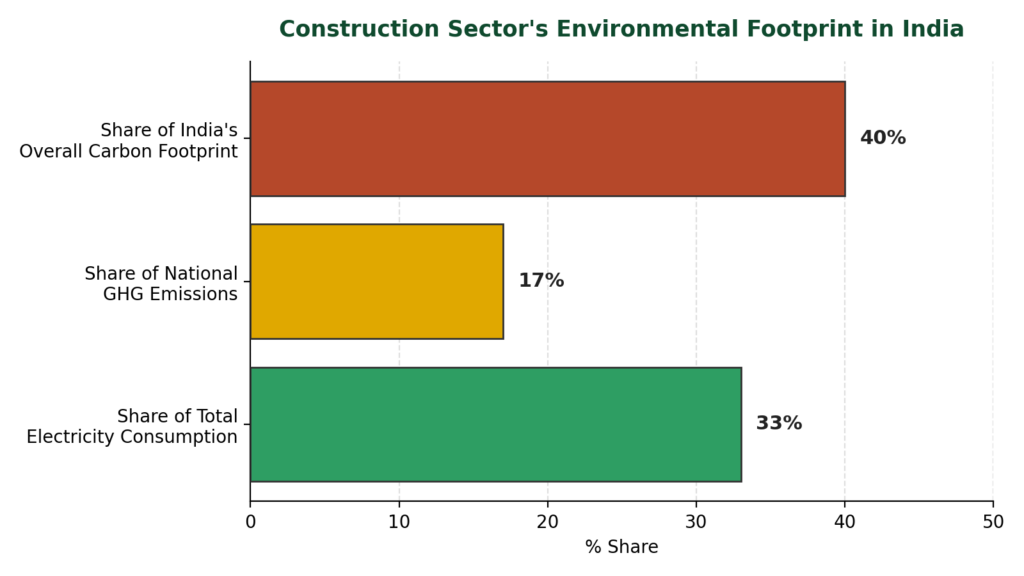
India’s construction sector is under pressure to change — and not just because of regulation. Buildings account for close to 40% of the country’s carbon footprint, and with urban population and construction activity both climbing fast, the materials going into Indian buildings are shifting just as quickly. Here’s what’s set to dominate green construction in India through 2026, and why it matters for your next project.
Why Green Materials Are No Longer Optional
India’s construction sector consumes a significant share of the country’s electricity and contributes meaningfully to national greenhouse gas emissions. As cities absorb millions of new residents each year, that footprint only grows — unless the materials themselves start pulling their weight on sustainability.
This is why the Indian Green Building Council (IGBC) — which now oversees more than 20,000 registered projects covering over 16 billion sq. ft. — has become central to how new buildings get designed and certified in India.
The Market Is Growing Fast
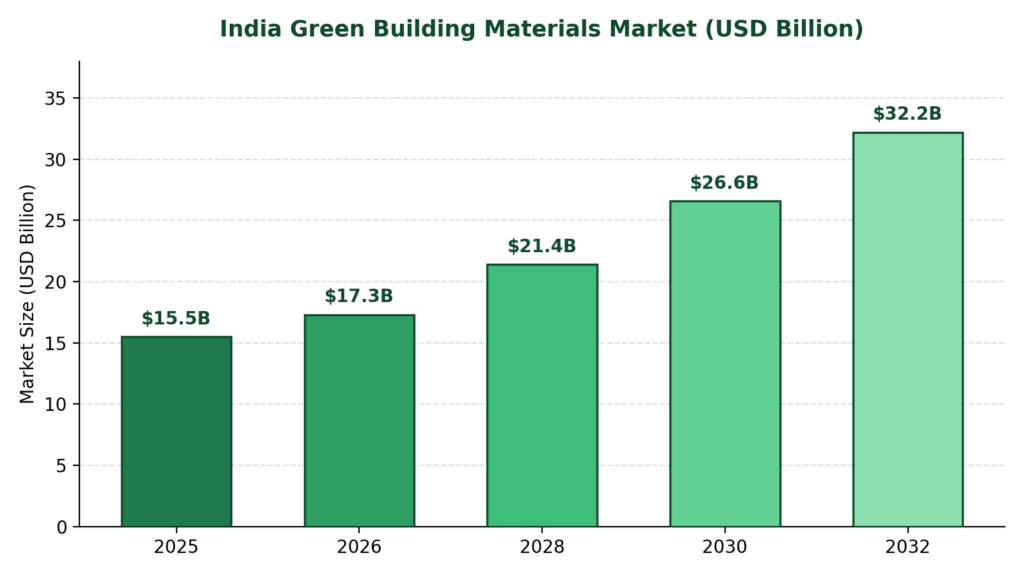
India’s green building materials market was valued at approximately USD 15.5 billion in 2025 and is projected to reach USD 32.2 billion by 2032, growing at a CAGR of around 11.3%. That growth is being driven by energy-efficiency mandates like the Energy Conservation Building Code (ECBC) and Eco-Niwas Samhita, along with rising developer and buyer demand for certified green construction.
Materials Set to Dominate in 2026
Here are the materials driving India’s shift toward greener construction, and why each is gaining ground:
|
Material |
Why It Will Dominate in 2026 |
|
AAC Blocks |
Fly-ash based, 60-70% lighter than clay bricks, and a top pick for thermal insulation and faster builds. |
|
Fly-Ash Bricks |
Repurpose thermal power plant waste, cutting landfill burden while offering solid structural strength. |
|
Low-VOC Paints & Coatings |
Improve indoor air quality and are increasingly required under green certification norms. |
|
High-Performance Glazing |
Low-U-value glass cuts heat gain, reducing cooling loads in commercial and residential towers. |
|
Recycled Steel |
Cuts embodied carbon significantly versus virgin steel while retaining full structural performance. |
|
Advanced Waterproofing Systems |
Extend building lifespan and reduce lifecycle material waste from repeated repairs. |
What This Means for Builders in Pune
For builders and homeowners in western India, the shift toward green materials isn’t just about certification — it’s about tangible savings on cooling costs, faster construction timelines, and materials that hold up better over the building’s lifecycle.
Evergreen Homes supplies several of the materials driving this shift, including fly-ash based AAC Block Adhesive, eco-efficient Ready Mix Plaster, and long-life Waterproofing Solutions engineered to reduce material wastage and repair cycles over a building’s lifetime.
Quick Takeaways
- India’s construction sector accounts for close to 40% of the country’s carbon footprint.
- The green building materials market is set to more than double from $15.5B (2025) to $32.2B (2032).
- AAC blocks, fly-ash bricks, low-VOC paints, and recycled steel are leading the shift.
- IGBC now oversees over 20,000 registered green building projects across India.
- Energy-efficiency codes like ECBC and Eco-Niwas Samhita are accelerating adoption nationwide.
Conclusion
Sustainable construction can deliver both environmental benefits and long-term performance. Evergreen Homes provides reliable solutions, from AAC adhesives to waterproofing systems, helping Pune builders build stronger and greener.