
Every year, thousands of homeowners across India discover the same painful truth only after the first heavy showers hit — their roof was never truly ready for the monsoon. Erratic rainfall patterns over the last few years have only made this worse, with sudden cloudbursts putting far more pressure on rooftops, terraces, and walls than older weather patterns ever did.
If you’ve been searching for the right way to waterproof roof surfaces, this guide walks you through everything: why it matters, when to do it, what it costs, and how to spot problems before they become expensive repairs.
Why Roof Waterproofing Can't Wait Until the Rains Start
Most Indian homes have flat RCC roofs, which are far more prone to water pooling than sloped designs common elsewhere. Add in intensifying monsoons, and even a small crack or an aging membrane can let water seep straight into your ceiling and walls.
Roof waterproofing prevents four major issues:
- Structural damage to the RCC slab and reinforcement bars
- Damp patches, peeling paint, and mold growth indoors
- Reduced insulation, leading to hotter interiors in summer
- Costly repeated repairs that could have been avoided with one-time waterproofing
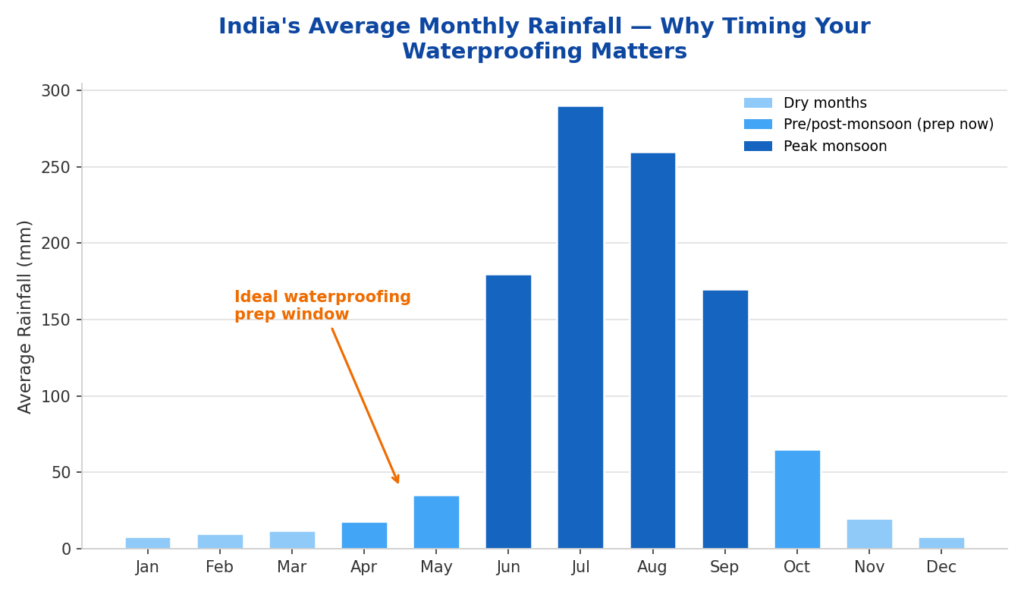
When Is the Right Time for Monsoon Waterproofing?

The ideal window for monsoon waterproofing falls between April and May — after peak summer heat has dried out the structure, but well before the first pre-monsoon showers arrive in June. Waterproofing applied during this period cures properly and is fully set by the time heavy rains begin.
What Happens If You Wait Too Long?
Applying waterproofing coatings during active rainfall is far less effective — most products need a dry surface and adequate curing time to bond properly. Rushed, mid-monsoon waterproofing jobs are one of the biggest reasons for premature failure.
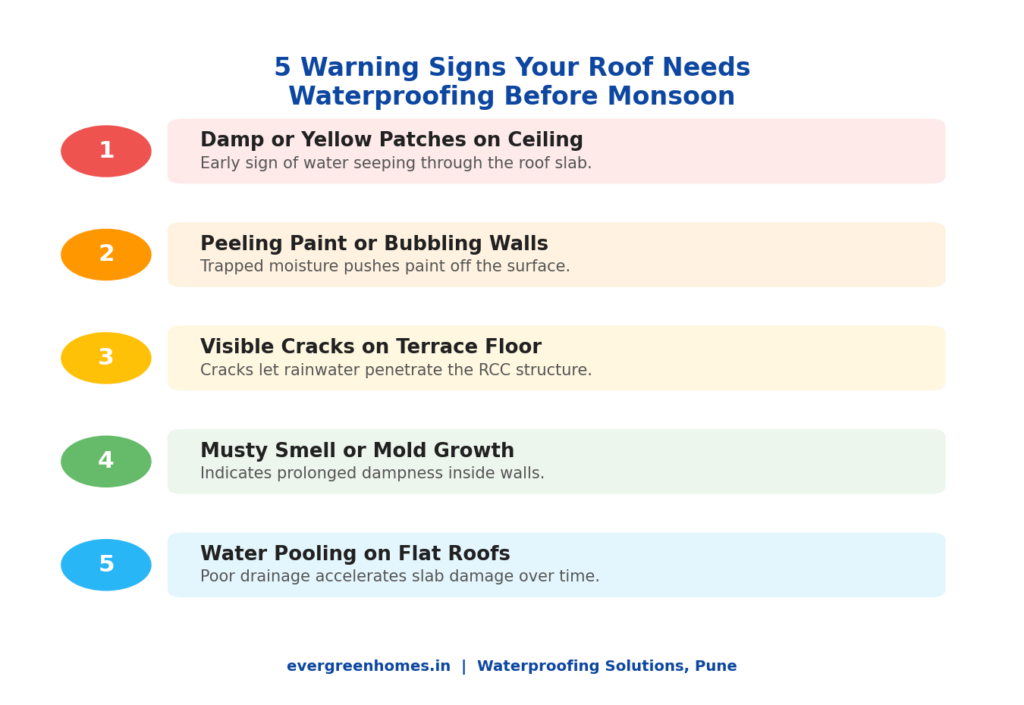
5 Warning Signs Your Roof Needs Waterproofing
Not sure if your terrace or roof already needs attention? Watch for these signs before the next monsoon.
Terrace Waterproofing: Step-by-Step Overview
Terrace waterproofing is one of the most critical parts of monsoon-proofing a home, since flat roofs bear the brunt of standing water. A typical professional process includes:
- Surface cleaning and removal of loose debris or old coating
- Crack filling and repair using structural grout or patch compound
- Applying a primer coat for better adhesion
- Laying a waterproofing membrane or chemical coating (2–3 layers)
- Curing period of 24–72 hours before the surface is used again
Bathroom and Wall Seepage: The Hidden Culprits
While terraces get most of the attention, bathroom waterproofing and wall seepage solution treatments are just as important. Bathrooms deal with constant water exposure, and if waterproofing isn’t done before tiling, moisture can travel into adjoining bedroom walls — a common but preventable issue in Indian homes.
Common Wall Seepage Fixes
- Sealing hairline cracks with flexible waterproofing chemicals for roof and walls
- Re-grouting tile joints in bathrooms and kitchens
- Applying damp-proof coatings on external walls exposed to rain
Cost of Roof Waterproofing: What to Expect
Costs vary depending on the method, roof condition, and product used, but here’s a general idea:
- Cementitious coatings: Budget-friendly, suited for minor repairs
- Liquid waterproofing membranes: Mid-range cost, flexible and durable for terraces
- Polyurethane or PU coatings: Higher upfront cost, but long-lasting (12–20 years)
While DIY coatings exist, hiring experienced waterproofing contractors in Pune ensures correct surface preparation and application thickness — the two factors that determine whether waterproofing lasts 2 years or 15.
DIY vs Professional Waterproofing: What Should You Choose?
Minor touch-ups, like sealing a small hairline crack, can often be handled with ready-made waterproofing chemicals for roof surfaces. However, full terrace waterproofing, bathroom waterproofing, or basement treatments require professional expertise — incorrect application is one of the leading causes of early waterproofing failure across Indian homes.
Frequently Asked Questions
Why does my terrace leak only during heavy rain?
Minor cracks or weak spots often don’t show issues under light rain, but heavy downpours increase water pressure and exploit these weak points, causing sudden leaks.
How early should I start monsoon waterproofing?
Ideally 4–6 weeks before monsoon arrives in your region, giving enough time for surface prep, application, and curing.
Is waterproofing a one-time investment?
Most quality waterproofing solutions last 8–15 years depending on the product and exposure, making it a long-term investment rather than a recurring expense.
Get Your Home Monsoon-Ready with Evergreen Enterprises
Don’t wait for the first leak to take waterproofing seriously. Evergreen Enterprises offers a complete range of waterproofing solutions — from Super Bondcrete and Super Flexibond to Rubberflex Black and Super Patch — trusted by builders and homeowners across Pune for durable, long-lasting protection.
Visit our Waterproofing Solutions page to get expert advice and the right product for your home before the rains arrive.