
Grout is the small detail that decides how a tiled surface looks and lasts. When it goes wrong, the results are obvious: cracks, dark patches, powdery joints and stubborn stains. The good news is that most common grouting problems come from a handful of avoidable mistakes. This guide covers the main issues, why they happen and how to prevent them.
Why Grouting Matters for Tile Installation
Grout fills the gaps between tiles, locks them in place, blocks dirt and helps manage small movements. Poor grouting lets moisture reach the adhesive or substrate, which can loosen tiles over time. That is why grouting should be planned together with your tile adhesive and surface preparation, not treated as an afterthought.
Common Grouting Problems and How to Avoid Them
1. Cracking and Shrinkage
Cracks usually appear when too much water is added to the mix, the grout dries too fast or the joint is too wide for the grout type.
How to Avoid It
Mix using the water ratio on the pack, never by guesswork.
Avoid grouting in strong sunlight or drying winds.
Use the recommended joint width for the tile and grout.
2. Pinholes and Voids
Small holes appear when air is trapped, joints are not fully packed or the surface is cleaned too aggressively. Press grout firmly into the joint with a rubber float at a diagonal angle, and clean lightly with a barely damp sponge.
3. Colour Variation and Discolouration
Patchy colour is often caused by inconsistent water, batches mixed differently or uneven curing. Mix all grout for one area in matching batches, keep water consistent and avoid wiping too early or too late.
4. Grout Haze on Tile Surface
A cloudy film appears when residue is left on the tile face. Clean promptly after the recommended waiting time and use a clean sponge with fresh water. Change the water often.
5. Efflorescence (White Powdery Deposits)
White salts appear when moisture moves through the joints and evaporates. The cause is often water getting behind the tile, so make sure the area has proper waterproofing and drainage. Also avoid excess water while grouting.
6. Crumbling, Powdering or Soft Grout
This is a sign of weak grout caused by too much water, old or badly stored material, or insufficient curing. Check the expiry date, store bags dry and follow the curing instructions.
7. Stains, Mould and Mildew
In bathrooms and kitchens, porous joints absorb dirt and moisture and grow mould. Choose a suitable grout for wet areas, seal where recommended and keep the area ventilated.
8. Uneven or Low Joints
Joints that are sunken or inconsistent usually come from poor spacing and rushed packing. Use spacers during tiling and fill joints completely to the tile edge.
Grout Joint Width: Get It Right
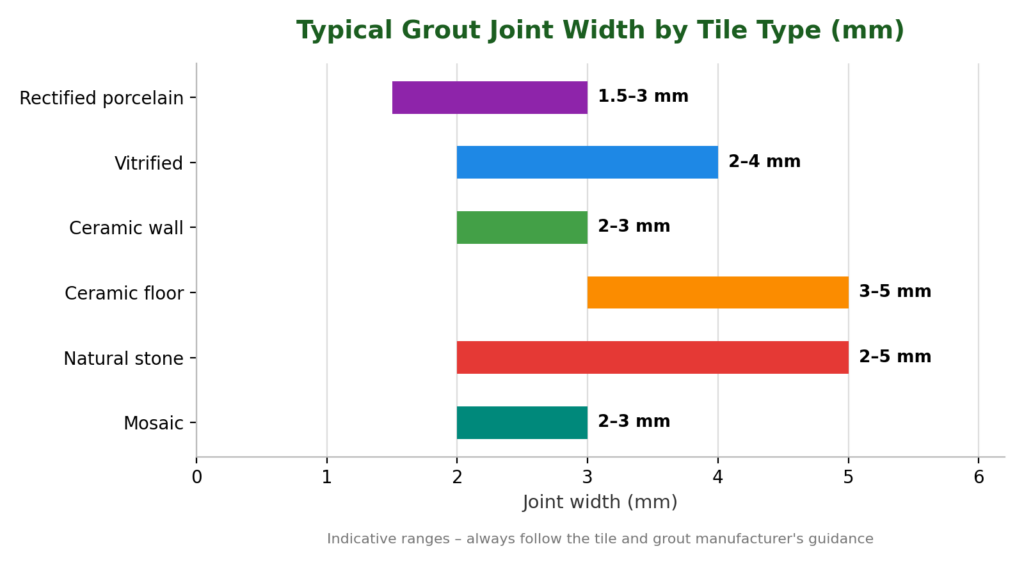
Joint width affects strength, appearance and how well the surface handles movement. The chart below shows typical ranges, but always confirm with the tile and grout manufacturer.
Best Practices for Flawless Grouting
Wait Until the Adhesive Has Cured
Grouting too soon traps moisture and can shift tiles. Follow the adhesive’s recommended waiting time, which is commonly around 24 hours for many products. Our guide to choosing tile adhesive explains why the correct product matters.
Clean Joints Before You Grout
Remove spacers, dust and excess adhesive from the joints so the grout can bond properly.
Work in Small Sections
Grout and clean small areas at a time so the material does not dry before you finish.
Cure and Protect
Avoid heavy traffic and water exposure until the grout has cured. Manufacturer guidance from bodies like the Tile Council of North America is a helpful reference.
Tile Grout vs Structural Grout
Do not confuse tile grout with structural grout. Structural grout is a high-strength, non-shrink material used under machines, columns and beams.
Learn more in our post on non-shrink grout uses and applications, or view the structural grout range.
Get Quality Tiling Materials from Evergreen
- Visit the store or contact them and check the product range.
- Ask for technical data sheets and application guidance.
- Request quotes for the same quantity from two or three suppliers.
- Check reviews from other contractors and builders.
- Confirm delivery timelines and billing terms in writing.
Frequently Asked Questions
Q – How long should grout dry before I walk on it?
– This depends on the product and conditions, but many grouts need at least 24 hours before light traffic. Follow the manufacturer’s guidance and protect the area from water until fully cured.
Q – Why does my grout keep cracking?
– The usual causes are too much water, fast drying, wide joints or movement in the substrate. Correct the cause before regrouting, or the new grout will crack too.
Q – How can I remove grout haze?
– Clean it soon after grouting using a damp sponge and fresh water. Old haze may need a suitable grout haze cleaner recommended by the manufacturer.
Q – Can grout be repaired without removing all tiles?
– Yes. Damaged grout can be raked out carefully and replaced with new grout, provided the tiles are firmly bonded and the cause of the failure has been addressed.
Conclusion
Most grouting problems trace back to the same causes: wrong water ratio, poor timing, unsuitable joint width and weak surface preparation. Follow the manufacturer’s instructions, work patiently and choose quality materials, and your grout will stay clean, strong and attractive for years. A little care during grouting saves a great deal of repair work later, keeping your floors and walls looking new and protecting the adhesive and waterproofing beneath the tiles.