
Water is the most patient enemy of any building. Given time, it finds its way through cracks, joints and porous concrete, leading to dampness, peeling paint, corroded steel and weakened structures. Choosing the right method of waterproofing is therefore one of the most important decisions in construction. This guide explains the main types of waterproofing used in buildings and where each works best.
Why Waterproofing Matters in Indian Buildings
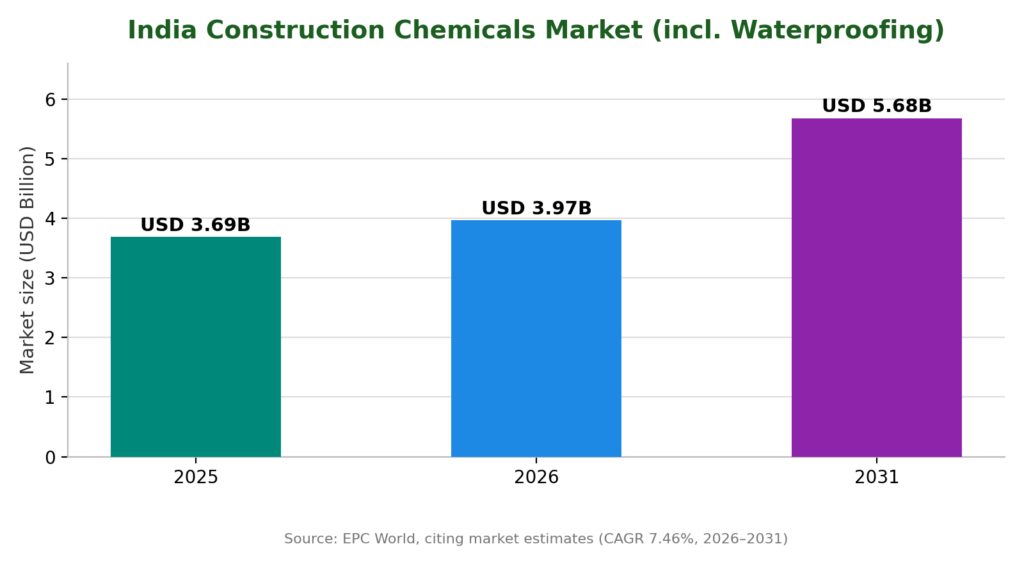
Heavy monsoons, hot summers and constant temperature cycles put roofs, bathrooms and walls under stress. According to EPC World, India’s construction chemicals market was valued at about USD 3.69 billion in 2025 and is expected to reach USD 5.68 billion by 2031, reflecting how important protective products have become. The chart below shows this growth.
Types of Waterproofing Used in Buildings
1. Cementitious Waterproofing
This is a mix of cement, fine aggregates and polymer additives, applied as a slurry coat with a brush or trowel. It is easy to use and cost-effective.
Best For
Bathrooms, balconies, water tanks, basements and internal wet areas where little movement is expected.
Limitation
Rigid coatings may crack if the structure moves, so flexible grades are preferred for exposed surfaces.
2. Liquid-Applied Membrane Waterproofing
Liquid membranes, such as polyurethane and acrylic types, are rolled or sprayed on and cure into a seamless, elastic layer. Their flexibility lets them bridge fine cracks, which suits terraces and roofs. Rubberised coatings such as Rubberflex Black fall into this family of protective coatings.
3. Bituminous Membrane Waterproofing
Bituminous sheets or coatings are a long-standing choice for flat roofs and podium decks. Sheets are bonded by torching or adhesive and overlapped to form a continuous barrier. They are durable but need skilled application at joints.
4. Crystalline Waterproofing
Crystalline products react with moisture and cement inside the concrete to form insoluble crystals that block pores. They work well in basements, foundations, lift pits and water-retaining structures, and can seal minor cracks over time.
5. Integral Waterproofing Compounds
These are admixtures mixed into concrete or mortar so the material itself resists water. Polymer additives such as SBR latex, for example Super Bond SBR 500, also improve bonding and are widely used in plaster, screed and repair work. Indian standards for such compounds are available through the Bureau of Indian Standards.
6. Sheet Membranes and Injection Grouting
PVC, TPO and EPDM sheets are used on large roofs and infrastructure, while injection grouting seals active leaks in cracks, joints and basement walls. Both are more specialised and usually done by trained applicators.
Which Waterproofing Is Right for Which Area?
- Terrace and roof: liquid membrane or bituminous membrane with proper slope and drainage.
- Bathrooms and kitchens: flexible cementitious coating or liquid membrane below the tiles.
- Basements and foundations: crystalline system or cementitious coating with drainage.
- Water tanks: non-toxic cementitious or crystalline systems suited for potable water.
- External walls: flexible coating combined with quality plaster.
Factors to Consider Before Choosing a Waterproofing System
Structure and Movement
Surfaces that expand, contract or vibrate need flexible systems, while stable interior areas can use rigid coatings.
Exposure and Climate
Roofs face sunlight, rain and temperature change; basements face hydrostatic pressure. Choose products designed for the actual exposure.
Surface Preparation and Application Quality
Even the best product fails on a dirty or damaged base. Repair cracks first with a fast-setting repair mortar such as Super Patch, then apply waterproofing as instructed.
Waterproofing vs Damp Proofing
The two terms are often confused. Damp proofing resists moisture, while waterproofing resists water under pressure. Learn the difference in our guide on waterproofing vs damp proofing.
Evergreen Waterproofing Solutions
Reliable waterproofing solutions designed to protect structures from water damage, leakage, and moisture penetration.
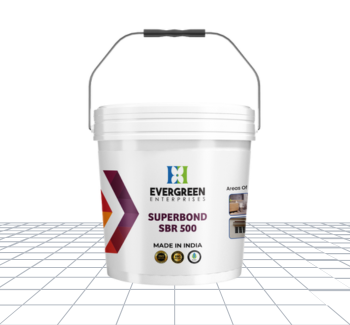
Super Bond SBR 500 is a high-performance SBR-based waterproofing solution that improves adhesion, flexibility, and long-term water resistance.
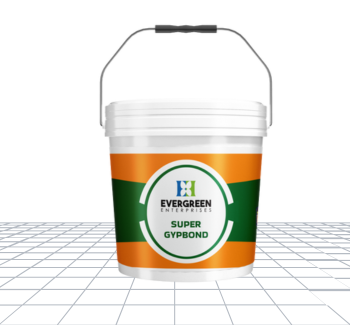
Super Bondcrete is a high-performance waterproofing solution that enhances bonding, prevents water seepage, and provides durable protection.
Frequently Asked Questions
Q – Which type of waterproofing is best for terraces?
– Liquid-applied membranes and bituminous membranes are the most common choices for terraces because they cope with sun, rain and movement. Correct slope, drainage and surface preparation matter as much as the product.
Q – How long does waterproofing last?
– Life depends on the system, quality of application, exposure and maintenance. Good products applied correctly can last many years, but inspect roofs and wet areas regularly, especially before the monsoon.
Q – Can I waterproof a bathroom without breaking the tiles?
– Existing tiled bathrooms are difficult to treat without removal, though injection grouting or specialised coatings can address some leaks. Ideally, waterproofing should be done before tiling.
Q – Is waterproofing the same as damp proofing?
– No. Damp proofing resists moisture rising or seeping slowly, while waterproofing withstands water under pressure or direct exposure. Choose based on the situation.
Conclusion
There is no single best waterproofing; the right choice depends on the area, structure and budget. Understanding the types of waterproofing used in buildings helps you ask better questions and avoid costly mistakes. Plan waterproofing early, use quality materials and follow correct application, and your building will stay dry and durable for years.
Involving a knowledgeable supplier early also helps you compare options, estimate quantities and avoid surprises, so your project stays on budget and on schedule while remaining protected through every monsoon season ahead.
Protect your building from leaks and dampness with the right system.