
Picking the wrong adhesive is one of the most common reasons tiles sound hollow, crack or pop off within a couple of years. The good news is that choosing correctly is not complicated once you know what to look at. This guide explains how to choose tile adhesive based on your tile type, surface and location.
Why Choosing the Right Tile Adhesive Matters
Tile adhesive is the invisible layer that holds your floor or wall together. A weak or unsuitable bond leads to hollow spots, cracked tiles, uneven surfaces and costly rework. Matching the adhesive to the tile protects both your investment and the finished look. If you are still deciding between mortar and adhesive, read our comparison of tile adhesive vs cement.
How to Choose Tile Adhesive for Different Types of Tiles
The single biggest factor is how much water the tile absorbs. Highly absorbent tiles grip mortar well, while dense, low-absorption tiles need a polymer-modified adhesive with stronger chemical bonding.
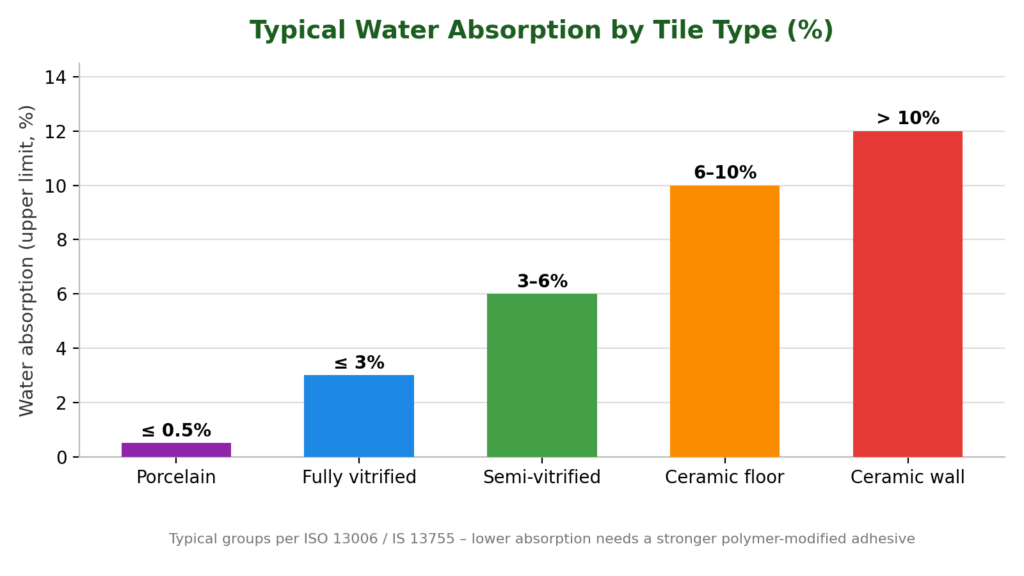
Ceramic Tiles
Ceramic wall and floor tiles are relatively porous, so a standard cementitious adhesive usually works well on interior walls and floors. Use a flexible grade if the surface is exposed to moisture or temperature change.
Vitrified and Porcelain Tiles
These tiles are dense and absorb very little water, so cement mortar alone cannot grip them properly. Choose a polymer-modified adhesive designed for vitrified tile fixing, and apply it using the recommended notched trowel.
Use Back-Buttering for Bigger Sizes
Spread a thin layer on the back of the tile as well as the surface. This ensures full coverage and eliminates hollow spots.
Large-Format Tiles and Slabs
Tiles of 600 x 1200 mm and above need an adhesive with extended open time, good slip resistance and high flexibility. They are also less forgiving of an uneven base, so surface levelling comes first.
Marble, Granite and Natural Stone
Natural stone can stain or discolour, especially light marble. Use a white or stain-free adhesive suited to stone, and follow the manufacturer’s guidance on sealing and curing.
Mosaic and Glass Tiles
These need a bright white adhesive that will not show through translucent tiles, along with a smooth, fine application.
Tile-on-Tile Renovation
When fixing over existing tiles, use an adhesive rated for non-absorbent surfaces after cleaning and roughening the old surface thoroughly.
Other Factors That Decide the Right Tile Adhesive
Location: Interior, Exterior, Wet Areas
Bathrooms, kitchens, balconies and building exteriors face moisture and temperature swings. For these, choose adhesives with high bonding strength and flexibility, and pair them with proper waterproofing beneath the tiles.
Surface Type
Concrete, plaster, AAC blocks and old tiles all behave differently. The surface must be clean, sound and free of dust, oil and loose material.
Working Time and Curing
Check open time, adjustability time and when you can grout. Adhesive that skins over before tiles are placed will fail to bond.
Standards and Certification
Look for compliance with IS 15477, the Indian standard for adhesives used with ceramic, mosaic and stone tiles, available through the Bureau of Indian Standards. For international benchmarks, the Tile Council of North America offers useful installation guidance.
Quick Checklist Before You Buy
- Identify your tile type and size.
- Note where it will be installed: floor, wall, wet area or exterior.
- Check the surface: concrete, plaster, AAC block or old tile.
- Pick an adhesive grade that matches the tile’s water absorption.
- Buy from a supplier who can explain coverage and application.
Choose from the Evergreen Tile Fixer Range
At Evergreen Enterprises, we supply a complete range of tile adhesives built for Indian site conditions
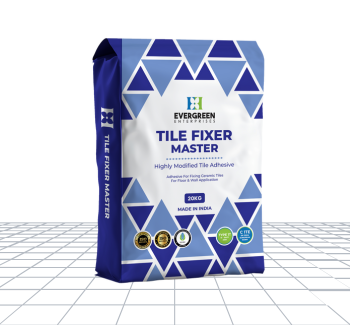
Tile-Fixer-Master is a high-performance tile adhesive designed for strong, durable, and reliable tile installation.
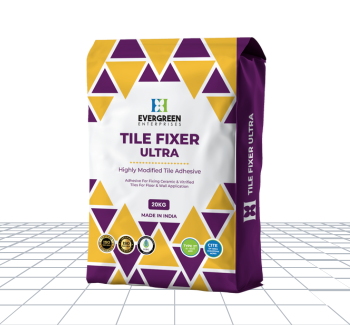
Tile Fixer Ultra is a high-strength tile adhesive designed for durable, reliable, and long-lasting tile installation.
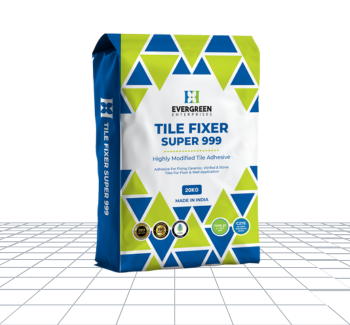
Tile Fixer Super 999 is a premium tile adhesive formulated for strong bonding, easy application, and long-lasting tile installation.
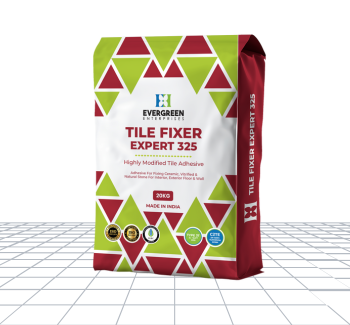
Tile Fixer Expert 325 is a dependable tile adhesive offering excellent bonding strength and lasting performance for tile installation.
Frequently Asked Questions
Q – Can one adhesive be used for all tile types?
– Not always. Ceramic tiles, vitrified tiles and natural stone have different absorption and size characteristics. A polymer-modified, high-performance adhesive covers a wider range, but check the product data sheet for its intended use.
Q – What thickness of adhesive should I apply?
– It depends on tile size and surface flatness. Use the notched trowel size recommended by the manufacturer, and back-butter large tiles to ensure full coverage without hollow spots.
Q – How long should I wait before grouting?
– Many adhesives allow grouting after roughly 24 hours, but timing varies by product, temperature and humidity. Always check the instructions on the pack.
Q – Do I need waterproofing under tiles in bathrooms?
– Yes. Tile adhesive is not a substitute for waterproofing. Apply a suitable waterproofing coat on the substrate first and let it cure before fixing tiles.
Conclusion
Choosing tile adhesive comes down to three questions: what tile, what surface and what location. Answer these and the right product becomes clear. When in doubt, ask a technical expert before you buy, because a few minutes of advice can prevent years of problems. Interested in why demand is growing so fast? See why tile adhesive usage is rising across India.
Take a few minutes to match tile, surface and location, follow the application instructions closely and use quality products. That small effort gives you a clean, level and long-lasting floor or wall that continues to look good for many years without hollow spots or loose tiles.
Not sure which adhesive suits your tile? Our team will guide you.