India’s construction industry is entering one of its most transformative years yet. Between rapid urbanisation, government infrastructure spending, and homebuyers who now care as much about performance as price, 2026 is reshaping what goes into Indian walls, floors, and foundations. If you are a builder, contractor, or homeowner planning a project this year, understanding the top construction materials and building trends in India for 2026 will help you build stronger, greener, and more cost-effectively.
How Much Have Costs Actually Risen?
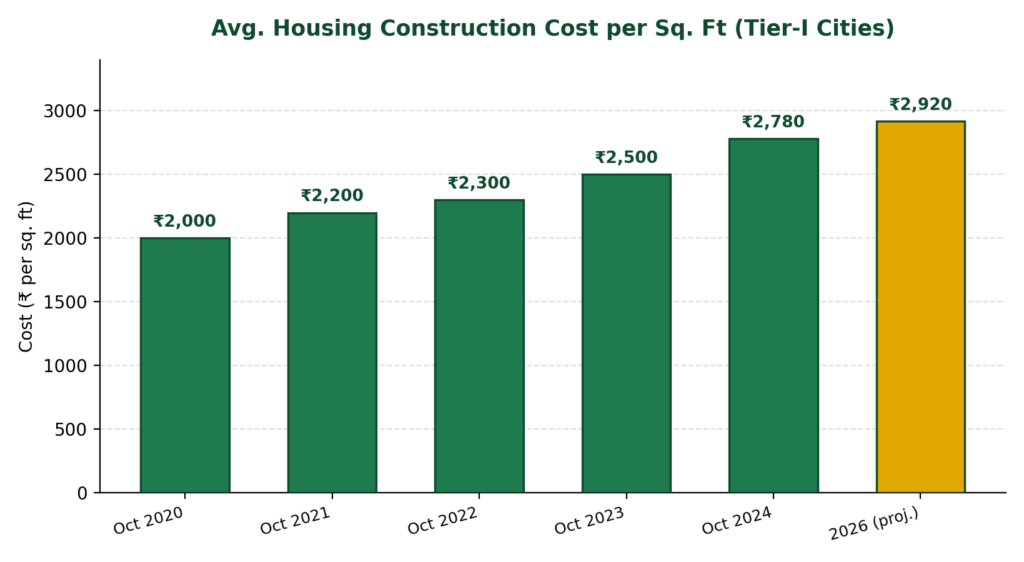
According to Colliers India, the average construction cost for premium housing projects in tier-I cities has climbed from ₹2,000 per sq. ft in October 2020 to ₹2,780 per sq. ft in October 2024 — a 39% increase in just four years, with an 11% jump in the last year alone. Industry estimates suggest a further 3-5% rise through 2026.
What's Actually Driving the Increase
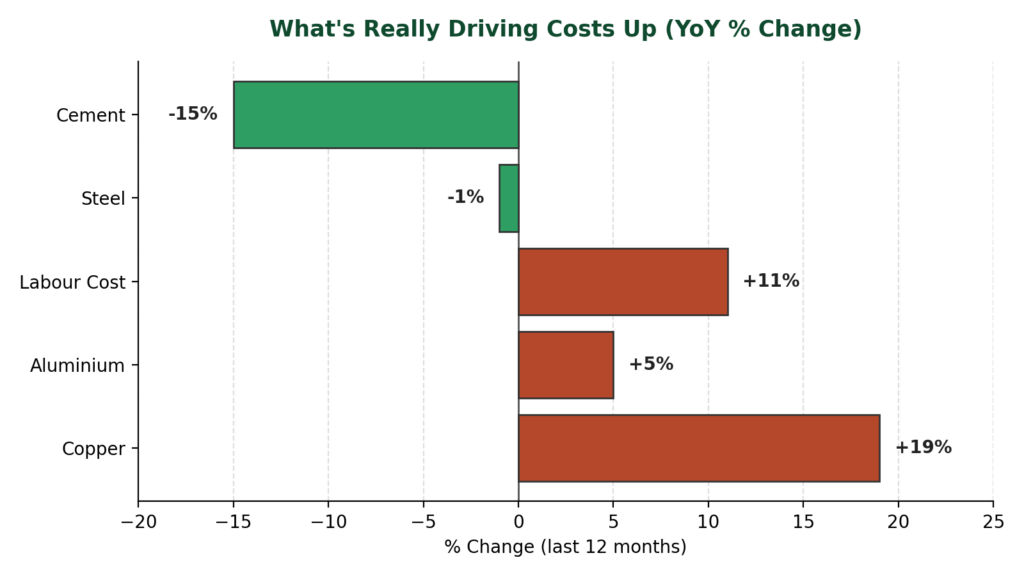
The picture is more nuanced than “everything costs more.” Labour costs have surged due to skilled worker shortages, while copper and aluminium — used heavily in wiring, fittings, and fixtures — have spiked sharply on global demand. Cement and steel, by contrast, have actually eased slightly over the same period.
Adding to the pressure, geopolitical disruptions — including tensions around the Strait of Hormuz — have pushed up freight and steel costs for some developers by as much as 10% on live projects, according to recent industry reporting.
How Homeowners Are Adapting in 2026
- Choosing value-engineered materials — like AAC blocks and ready-mix plaster — that cut labour time and material wastage without compromising quality
- Building in phases, starting with the structure and core walls, and deferring interiors and premium finishes to a later stage
- Opting for turnkey contractors who lock in material rates upfront, reducing exposure to mid-project price swings
- Keeping a 10-15% contingency budget specifically to absorb material price volatility during construction
- Choosing durable, low-maintenance materials — especially waterproofing and structural grouts — to avoid expensive repairs later
What This Costs by Specification Level in 2026
Where your project lands on the cost spectrum depends heavily on the specification tier you choose:
|
Specification Tier |
Cost per Sq. Ft (2026) |
Typical Materials |
|
Economy |
₹1,200 – ₹1,500 |
Local materials, standard cement, basic tiles |
|
Standard |
₹1,800 – ₹2,200 |
Reputed cement, AAC block/red brick, vitrified tiles |
|
Premium |
₹3,500 – ₹5,500 |
Branded finishes, designer tiles, upgraded fittings |
|
Ultra-Luxury |
₹6,000+ |
Imported finishes, custom architecture, premium systems |
Building Smart, Not Just Cheap
The biggest shift in 2026 isn’t that homeowners are cutting corners — it’s that they’re being far more deliberate about where every rupee goes. Spending slightly more upfront on durable core materials, and less on things that can be upgraded later, is emerging as the smarter long-term strategy.
Evergreen Homes helps Pune homeowners build cost-efficiently without cutting corners, with products like Ready Mix Plaster that reduce labour time and material wastage, and Waterproofing Solutions that protect your investment from costly repairs down the line.
Conclusion
Cost-efficient construction starts with choosing the right materials. Evergreen Homes offers reliable solutions that help reduce labour, wastage, and future maintenance costs while maintaining quality and durability.